

Did you know roughly 135 million Americans regularly use sugar alternatives?¹ Read on for the secret behind these special sweeteners and which one is considered the healthiest.
Key Takeaways
- Sweetness is detected by specific receptors in our mouths.
- Those receptors can be activated by sugar, and also by certain molecules called sweeteners.
- These sweeteners are many times more powerful than sugar, so they can be used in tiny quantities.
- Some of them also can't be metabolized by the body.
- That makes the sweeteners "non-nutritive," meaning they effectively provide zero calories.
- Stevia, a natural sweetener, is generally considered the healthiest.
See Related: How to Make Thick Traditional Hot Chocolate
Understanding Non-Nutritive Sweeteners
The USDA categorizes sweeteners into two groups: nutritive and non-nutritive.² Nutritive sweeteners are those that provide calories, like glucose (sugar).
Non-nutritive sweeteners, on the other hand, do not provide calories. Or, to be technical, they provide such small quantities of calories as to be effectively calorie-free.
High-Intensity Sweeteners
For some sweeteners, that's possible because they are much, much sweeter than sugar. Aspartame, for example, is roughly 200 times sweeter than sugar.³ Once purified, stevia can be up to 300 times sweeter.⁴
These powerful sweeteners are known as "high-intensity sweeteners." Because they are so sweet, they only need to be used in tiny quantities.
Additionally, some sweeteners can't be metabolized by the body. That means they pass right through without any calories being absorbed.⁵
Artificial Sweeteners vs. Natural Sweeteners
Before we explain how these sweeteners work, it's important to note another distinction. Non-nutritive sweeteners are sometimes collectively referred to as artificial sweeteners.
But not all non-nutritive sweeteners are created in a lab. Stevia, for example, is made from the leaves of a South American plant called Stevia rebaudiana.⁶
How Sweeteners Work
Sweetness is more complex than you might think. Our taste buds contain specific receptors that can detect it.
Sucrose, for example, binds to these receptors. That's why it tastes sweet.
But sweeteners can bind to these receptors much more strongly than glucose or sucrose. That's why they are so much sweeter than sugar.⁷

Common Sweeteners
Stevia
Stevia is one of the only natural sweeteners that is "generally recognized as safe."⁸ That's a specific term, which can only be applied to an ingredient after rigorous testing by experts.⁹
As mentioned, stevia is created using the stevia plant.¹⁰ The plant's leaves contain steviol glycosides, which have an extremely strong sweet taste.¹¹
Research shows that stevia is safe in moderation. What does moderation mean? According to the FDA, you'd need to eat roughly 27 packets of stevia in a single day to hit the acceptable daily intake.¹²
Stevia's natural origins make it a popular option for people looking for a strong sweetness profile without artificial ingredients. Research suggests it's healthier than artificial sweeteners, too.¹²
For example, one 2022 review found that stevia may help support the gut microbiota.¹³
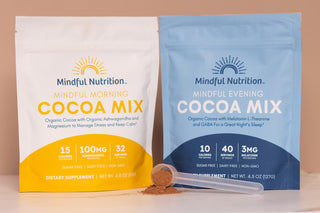
Stevia is a natural sweetener with very few downsides. That's why we use it in all of our sugar-free cocoa mixes, from our Magnesium Hot Cocoa Mix to our Skinny Organic Hot Chocolate Blend.
Monk Fruit
Another natural sweetener approved for use by the FDA is monk fruit sweetener.¹⁴ It's roughly 150 times sweeter than sugar.¹⁵
It's derived from the monk fruit. Despite containing sugars, the fruit's sweetness actually comes from a type of antioxidant called mogrosides. ¹⁶ Antioxidants are powerful molecules that can help protect the body against oxidative stress, which is the term for damage caused by another type of molecule called free radicals.¹⁷
Acesulfame Potassium (or Ace K)
One popular FDA-approved artificial sweetener is acesulfame potassium, otherwise known as acesulfame K or ace K. The "K" refers to potassium's elemental symbol.
Ace K is about 200 times sweeter than sugar. According to the FDA, the acceptable daily limit is about 23 packets of the sweetener.¹⁸
Aspartame
One of the most popular sweeteners is aspartame. It's used around the world in thousands of products, from cola to candy.¹⁹
Aspartame is generally considered safe for consumption.²⁰ However, in 2023, the World Health Organization warned that the sweetener was being investigated as "possibly carcinogenic to humans."²¹
Sucralose
Unlike most other sweeteners, sucralose is made from natural sugar. The sugar is changed chemically, making it a whopping 600 times stronger with practically zero calories.²²
Bonus: Can You Drink Hot Chocolate When Pregnant?

Potential Health Benefits
The main benefit of sweeteners is that they can help you reduce how much sugar you consume. Though sugar can be fine in moderation, excessive consumption can lead to a host of concerning effects.²³
Blood Sugar
Unlike natural sugar, artificial sweeteners generally don't have an effect on blood sugar.²⁴ That's especially helpful for people who need to carefully monitor their blood glucose levels.²⁵
Weight
Sweeteners are widely used for weight loss. Sugar is high in calories, so replacing it with zero-calorie sweeteners can potentially help reduce the number of calories you eat. That, in turn, could potentially help you stay in a calorie deficit, which is crucial for losing weight.²⁶
For example, in one study, participants who used non-nutritive sweeteners lost 6.3% of their body weight over 10 months, on average.²⁷ Multiple health organizations have noted the potential weight-related benefits of artificial sweeteners.²⁸
However, some other studies have connected long-term use of artificial sweeteners with weight gain.²⁹
Conclusion
There's a lot more to sweetness than sugar and spice and everything nice. Several non-nutritive sweeteners are available to achieve the sweetness of sugar with none of the calories.
Some are natural, like stevia, which is generally considered the healthiest. Others are artificial, like aspartame and ace k.
Sweeteners are widely used to help reduce or eliminate the sugar content of sweet foods. You've likely encountered diet soda or some other diet drink, or tried a sugar-free candy. By reducing sugar intake, sweeteners may help people avoid some of the problems associated with excess sugar intake.
Like many things, sugar substitutes should be enjoyed in moderation.
Keep Reading: 9 Best Pumpkin Drinks to Sip and Savor This Winter

Frequently Asked Questions
How Do They Make Sugar-Free Drinks Sweet?
Sugar-free drinks are made sweet with artificial sweeteners.
These compounds are intensely sweet, often hundreds of times sweeter than sugar. Tiny amounts of them can achieve the same amount of sweetness as sugar. Because of this, and the fact that some of them can't be metabolized by the human body, they can provide that sweetness with few or no calories.
Why Do Zero-Sugar Drinks Taste Sweet?
The "sweet" taste is a result of molecules binding with specific taste receptors in our mouth. These receptors can be activated by sugar. But they can also be activated by other molecules.
These other molecules are called sweeteners. By triggering our sweetness receptors, they give sugar-free drinks a sweet taste with fewer calories (or none at all).
How Is Something Sugar-Free But Sweet?
Sugar isn't the only thing that can taste sweet. Sweeteners like stevia can create a similar "sweet" taste without as many calories.
Sources
- Calorie-free sweeteners can disrupt the brain’s appetite signals
- Sweeteners | National Agricultural Library
- Aspartame | EFSA
- Health Benefits of Stevia vs. Sugar? | Sutter Health
- Health Benefits of Stevia vs. Sugar? | Sutter Health
- Stevia: Health Benefits and Risks
- How can an artificial sweetener contain no calories? | Scientific American
- How Sweet It Is: All About Sweeteners | FDA
- Generally Recognized as Safe (GRAS) | FDA
- How Stevia is Made - The Authoritative Voice for the Stevia Industry
- Steviol glycosides
- Stevia Is Sweet — But Is It Good for You?
- The Effects of Stevia Consumption on Gut Bacteria: Friend or Foe? - PMC
- Aspartame and Other Sweeteners in Food | FDA
- Monk Fruit Sweetener: Weight Loss Effect, Safety, and Benefits
- Recent advancements in mogrosides: A review on biological activities, synthetic biology, and applications in the food industry - ScienceDirect
- Monk Fruit: 4 Benefits, Nutrition, and Risks
- Acesulfame Potassium: What is it and where is it used?
- What products contain aspartame? Here's a list of popular foods, beverages with the sweetener. - CBS News
- Aspartame and Other Sweeteners in Food | FDA
- Aspartame hazard and risk assessment results released
- What to Know About Sucralose
- The sweet danger of sugar - Harvard Health
- Artificial sweeteners: Any effect on blood sugar? - Mayo Clinic
- Artificial sweeteners and their implications in diabetes: a review
- Calorie Deficit: A Complete Guide
- Artificial Sweeteners & Weight Gain
- Artificial sweeteners: sugar-free, but at what cost? - Harvard Health
- University of Minnesota-led study links long-term artificial sweetener intake to increased body fat adipose tissue volume
--
Mindful Nutrition is a veteran-owned company with a passion for wellness. We use natural ingredients in our products, including melatonin, GABA, ashwagandha, and L-Theanine. Our hot cocoa blends are vegan, non-GMO, and plant-based, crafted to be a comforting addition to your daily ritual. We utilize third-party testing on all products to ensure purity, quality, and safety. To stay connected and learn more, follow us on Facebook, Instagram, and LinkedIn.
--
These statements have not been evaluated by the Food and Drug Administration. Our products are not intended to diagnose, treat, cure, or prevent any disease. The content on this website is for informational purposes only and is not intended as a substitute for advice from your physician or other healthcare professional. Always consult with a qualified healthcare provider regarding any medical condition or health concerns.